
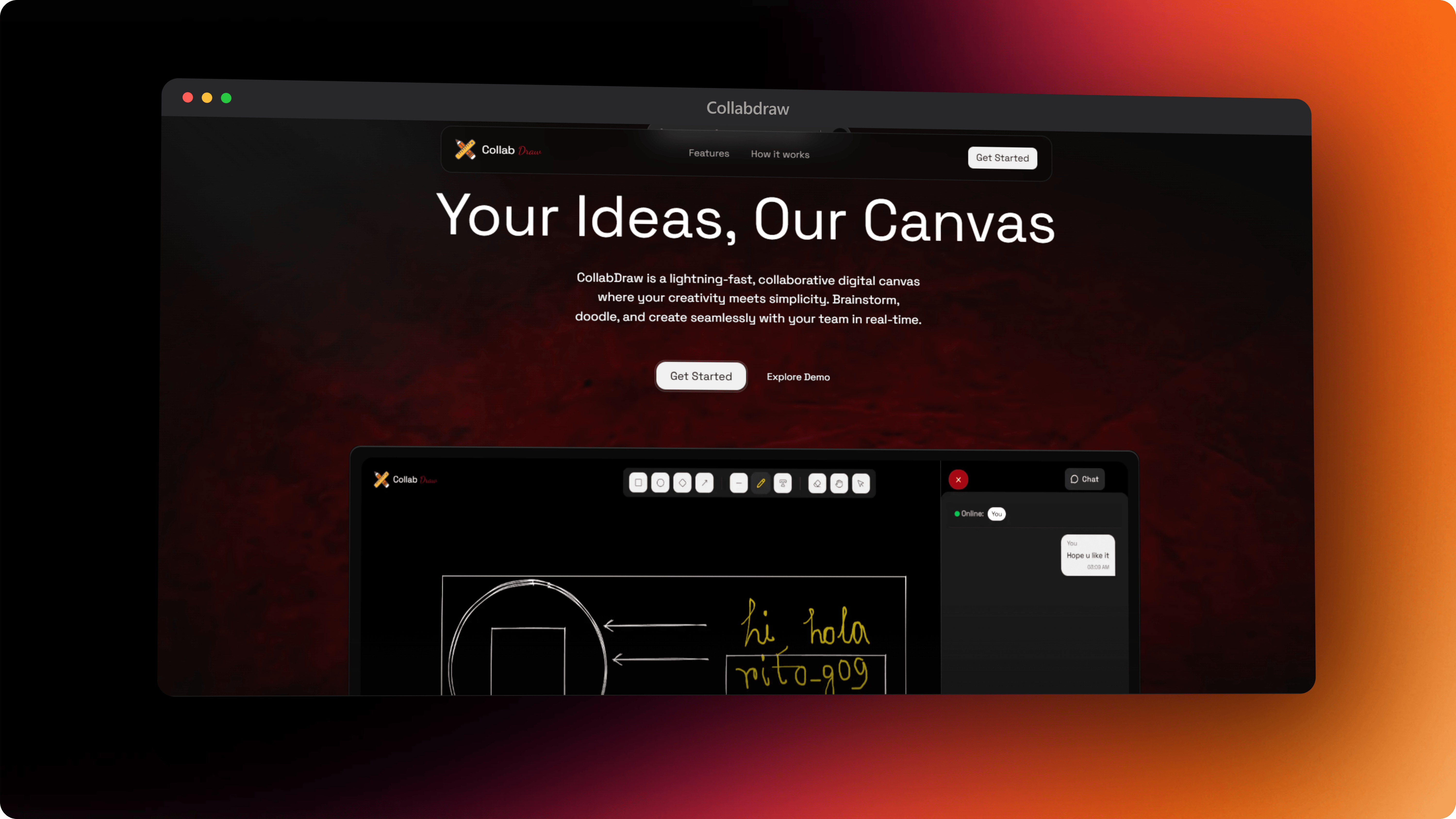
CollabDraw
A real-time collaborative drawing platform with multi-user canvas sync, live chat, and room-based collaboration.
Timeline
3 months
Role
Full Stack Developer
Team
Solo
Status
CompletedTechnology Stack
Key Challenges
- Real-time canvas synchronization
- Handling multiple users in a shared room
- Preventing race conditions during drawing
- Low-latency real-time chat
- Scalability of WebSocket connections
Key Learnings
- WebSocket-based real-time systems
- Optimizing canvas rendering performance
- State synchronization across clients
- Room-based architecture design
- Building collaborative products
CollabDraw: Real-Time Collaborative Drawing Platform
Overview
CollabDraw is a real-time collaborative drawing application that allows multiple users to join a shared room and draw together on the same canvas. All drawing actions are instantly synchronized across users, enabling seamless collaboration similar to online whiteboards.
In addition to live drawing, CollabDraw also includes real-time chat, making it ideal for brainstorming sessions, teaching, remote collaboration, and quick visual discussions.
What Users Can Do
- Create or Join Rooms: Start a private drawing room or join one via a unique room ID.
- Draw Together in Real Time: All strokes appear instantly for every participant.
- Live Chat: Communicate with collaborators while drawing.
- Multi-User Sync: See cursors and drawing updates from multiple users simultaneously.
- Responsive Canvas: Smooth drawing experience across different screen sizes.
- Low-Latency Updates: Optimized for fast, real-time interactions.
Why I Built This
I built CollabDraw to deeply understand how real-time collaborative systems work under the hood.
While building full-stack apps, I realized most projects don’t push you to solve problems like:
- Synchronizing state across multiple users
- Managing concurrent actions without conflicts
- Maintaining performance under continuous real-time updates
CollabDraw was my way of tackling these challenges head-on while building something genuinely useful and interactive.
Tech Stack
- Next.js – Full-stack React framework
- TypeScript – Type safety and scalability
- React – Interactive UI
- Tailwind CSS – Rapid UI styling
- Shadcn UI – Accessible component system
- MongoDB – Room and user data persistence
- WebSockets – Real-time communication layer
- Zod – Input validation
- React Hook Form – Form handling
- Vercel – Deployment and hosting
After Launch & Impact
- Successfully handled multiple concurrent users drawing in the same room.
- Achieved smooth real-time canvas synchronization with minimal lag.
- Gained strong hands-on experience with WebSockets and event-driven systems.
- Improved understanding of performance optimization for canvas-based applications.
- Helped shape my confidence in building real-time collaborative products.
Key Technical Highlights
- Event-based drawing synchronization using WebSockets
- Optimized canvas re-rendering to avoid unnecessary redraws
- Room-scoped socket connections to reduce noise and improve scalability
- Clean separation between UI state and real-time events
Future Plans
- Add cursor presence indicators for better collaboration
- Introduce export options (PNG / PDF)
- Implement user authentication for persistent rooms
- Add voice or video integration
- Scale WebSocket layer for higher concurrency